

1Margin and markup are not the same number
Markup is the extra you add to cost. Margin is the share of the selling price that is left after cost. Buy a pack for 800 and sell it for 1,000 and your markup is 25 per cent, but your margin is 20 per cent. Mixing the two up is the most common reason a pharmacy believes it earns more than it does.
Pick one and use it everywhere, in your head and in your records. Margin is the better choice because it tells you how much of each sale you keep.
In short: Markup is on top of cost; margin is the share of price you keep. Use margin.
2Cost belongs to the batch
You may buy the same product twice in a month at two different prices. If you record only one cost per product, you either overstate or understate margin on one of those batches without knowing it. Keep the purchase cost against each batch when you receive it, along with the supplier and the date.
That also tells you the real cost of old stock still on the shelf when a new, dearer batch arrives.
3When to reprice
- Supplier price rises: check the margin on what you now buy, and decide whether to pass it on. The old stock on the shelf can sell at the old price until it runs out.
- Supplier price falls: you can keep the price and take the margin, or cut it if competitors will. Decide, rather than letting it happen by accident.
- A competitor moves: look at the fast movers first, because customers compare those and rarely compare the rest.
4Fast movers and slow movers differ
A cheap product that sells fifty times a day can earn more from a thin margin than an expensive one that sells twice a month. Do not apply one percentage to everything. Keep fast, comparison-shopped lines sharp, and let the slower, specialist lines carry a fuller margin, since a customer who needs them is less likely to shop around.
Some prices are set for you by regulation or by the supplier’s recommended price. Where that applies, your lever is the cost you buy at, not the price you sell at.
5Discounts and write-offs come out of margin
A ten per cent discount on a product with a twenty per cent margin gives away half of it. Check what a discount does to the margin before you offer it as a habit, and remember that stock lost to expiry is a full-cost loss that no margin on the rest quietly repays.
6How Optima does this
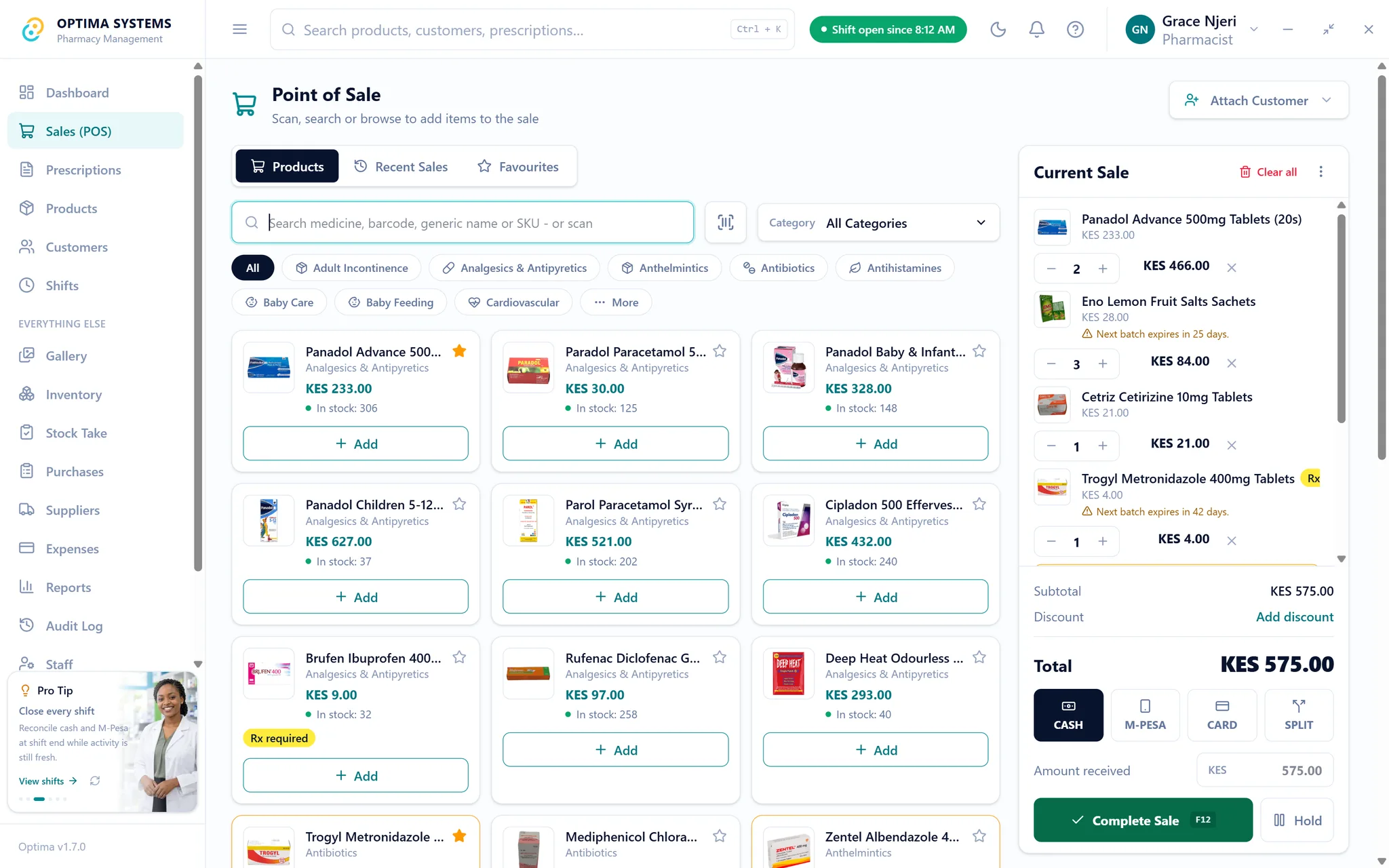
This section is about our own product. Optima holds purchase cost against each batch when you receive a delivery, valued stock is available in reporting, and discounts are applied at the till and recorded on the sale. Products can be marked standard-rated or VAT-exempt, so VAT is worked out when a sale completes.
See what Optima costs, or read the guide on expiry, since write-offs are the other half of the margin story.
What Optima costs
KES 25,000 once for the main computer at each pharmacy site, VAT included, with a lower price for connected tills, lifetime updates and no monthly subscription.
Read next

Setting reorder levels so you stop running out of fast movers
A reorder level is the stock count at which you order again. How to set one from sales and supplier delivery time, plus a safety buffer, without tying up cash in shelves of slow stock.
Read it
What to ask before you buy pharmacy software in Kenya
Twelve questions that separate pharmacy software that will still suit you in five years from software that demonstrates well. Written for owners comparing systems, including where Optima does not fit.
Read it